

The Power of Physical Access
Katie Milligan, Deputy CEO of Openreach, shares her thoughts on sharing our network.
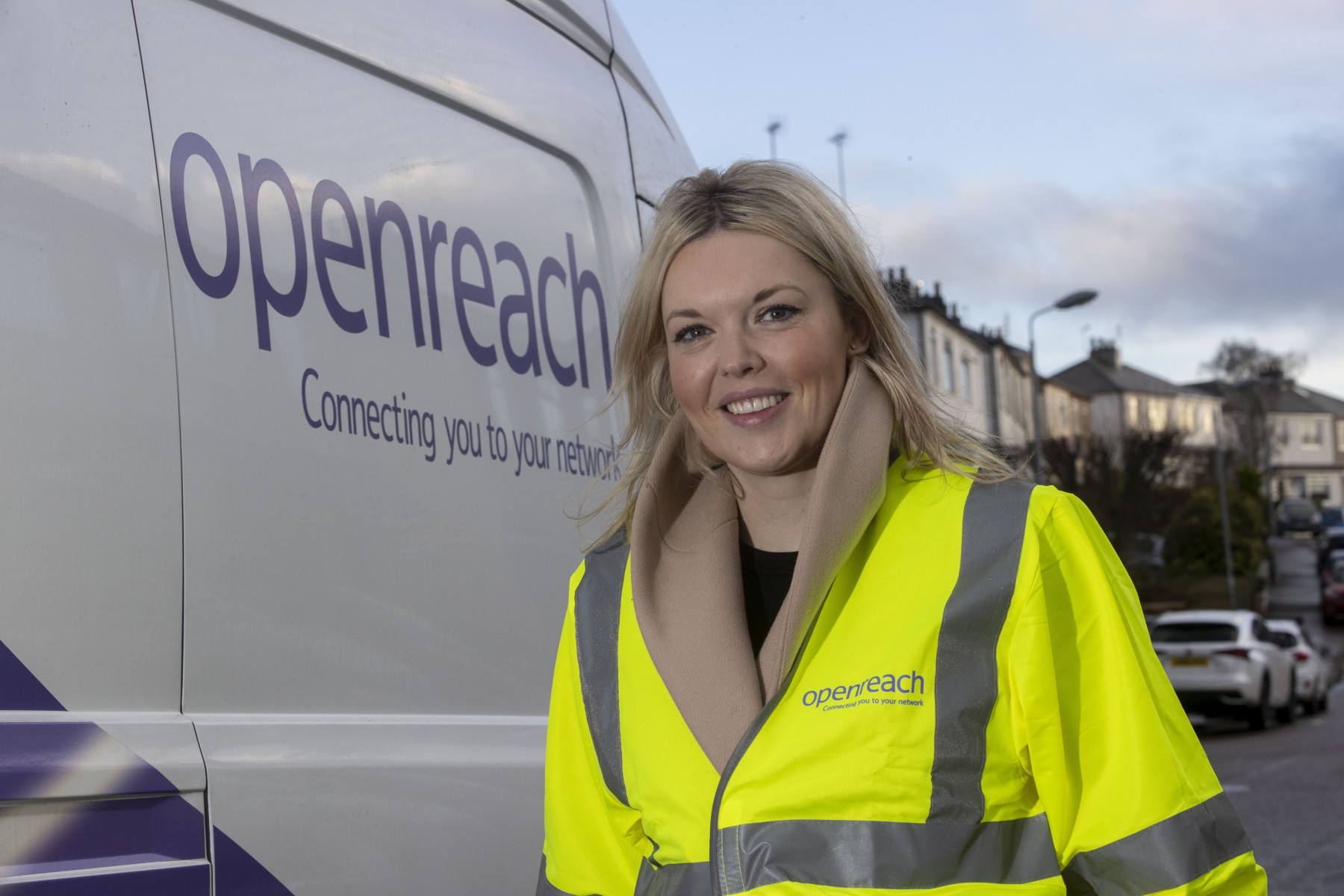
Hey everyone, I wanted to talk about something that's created some noise recently – our ‘ducts and poles’.
‘Physical Infrastructure Access’ (or PIA as it’s known in the trade) is the Openreach product that, since 2011, has allowed rivals to build their own full fibre connections using our national network of poles, ducts and underground chambers. It’s a topic that often leads to fiery debates in our super-competitive market…
So I wanted to share my point of view, as someone who leads Openreach’s customer relationships and talks regularly to a lot of PIA users about how they’re finding it.
A gigabit game-changer
Firstly, I don’t know anyone in the industry who reckons PIA hasn’t been a game-changer. Industry regulator Ofcom says it’s been “transformational” and that it’s delivered a “greater-than-expected” level of build. And that’s hard to argue with. Billions of pounds of investment have flooded into new gigabit-capable networks since PIA was introduced, and more than 170 companies have now signed up to use it. Those companies have placed orders to use more than 1.3 million poles and over 193,000 kilometres of duct. That’s 31% of our poles and 39% of our duct network. And the result? Over a million more customers have been connected to full fibre broadband, in all corners of the UK. My colleagues are really proud of this. We’ve developed a first-class product which has become the bedrock for massive infrastructure investment and an explosion in competition.
Passive by name, not by Nature
But it’s not just Openreach that’s been key to this success. One of the most popular industry forums we hold – chaired by the OTA (Office of the Telecoms Adjudicator) – brings all of our major PIA customers together to review performance, safety, security, new requirements and our development roadmap. It’s always a healthy discussion, with lots of ideas and collaboration around how we, as an industry, can make PIA even better. That leads to investments in automation, simplification and service management, which we review regularly. We also publish quarterly performance stats which are monitored by Ofcom and, every six months, the regulator checks in with industry CEOs to make sure things are on track. Over the last few years we’ve focused on developing PIA to support fibre build, now we increasingly need to focus as an industry on the rules of engagement where competition now exists, or “working together” as we call it. Believe me, not a week goes by at Openreach when we’re not obsessing about making PIA the best it can possibly be.
Valued and valuable
Of course, price will always be a debate. Who doesn’t want more for less? Every customer I know does. And it’s worth noting that the price of PIA is set by Ofcom, not by us. But I’ve been surprised by some claims that PIA doesn’t represent good value for money or that Openreach doesn’t charge itself for using our passive network. This is simply not true. For a start, it can cut the cost of building fibre networks by around half according to the regulator. And that stands to reason. Because using PIA means not spending a ton of money on construction. It means you can launch new services in a fraction of the time it’d take to source and erect your own poles. And the proof’s in the pudding. We get brilliant feedback and high ratings from PIA customers consistently and around a third of our duct and pole network is being used. Meanwhile, orders continue flooding in, so I’m not exaggerating when I say that PIA is one of our most valued products. But the reality is that PIA customers pay just 4% towards the £850 million cost of maintaining the network but use a lot more of it than that. The rest of the cost is borne fully by Openreach. So, in terms of value, the prices are probably too low. They’re certainly not sustainable in the longer term.
No rural remedy
That brings me on to rural networks. I’ve also seen comments that building fibre to rural communities is expensive. And I agree! We’ve been building to rural homes for more than a decade. Around a third of our full fibre network is in rural areas, so we know better than anyone how tough it can be. With sparser populations and isolated properties spread out across the nation – it takes some serious engineering know-how to connect the most remote places. Smart investors and operators know this. Of course, PIA can be part of the answer, but the best operators also use innovation, skills and experience to solve problems, reduce their costs and bridge the rural gap. And they build strong partnerships with local and national governments to reach the very toughest areas, under schemes like Project Gigabit, where the costs of PIA get reflected in everyone’s bids for public funding.
Sharing’s caring
It’s easy to forget that we’re delivering amazing, transformative tech here. And that it fundamentally changes lives, the economy and our environment for the better. But broadband built through PIA has some lovely added benefits too. The community and environmental gains are big. It means fewer roadworks, less machinery, lower carbon emissions and less disruption to people’s lives and nature. It also prevents unnecessary street furniture, which everyone’s keen to avoid. In fact, PIA’s avoided more than three million new poles being erected in rural areas so far. And that’s why we think other companies, like VMO2, should be sharing their ducts and poles on the same transparent terms and prices as we do. While the regulation to share other passive networks exists – it is called the Access to Telecoms Infrastructure (ATI) regulation – it’s simply not working. Because unlike our PIA product, there’s no clear and published rate cards and negotiating access on a case-by-case basis is nigh-on impossible. That’s why we’ve asked the Government to look again at the regulation. Openreach was created to enable competition, so it’s in our nature, and PIA is a perfect example of that. But others doing the same could amplify the greater good even more. The current regulations for network sharing have never worked effectively but, with a rethink and by working together as an industry, we can accelerate the journey to a bright connected future for the UK.
Katie Milligan Deputy CEO, Openreach
















