

Storm Goretti Openreach
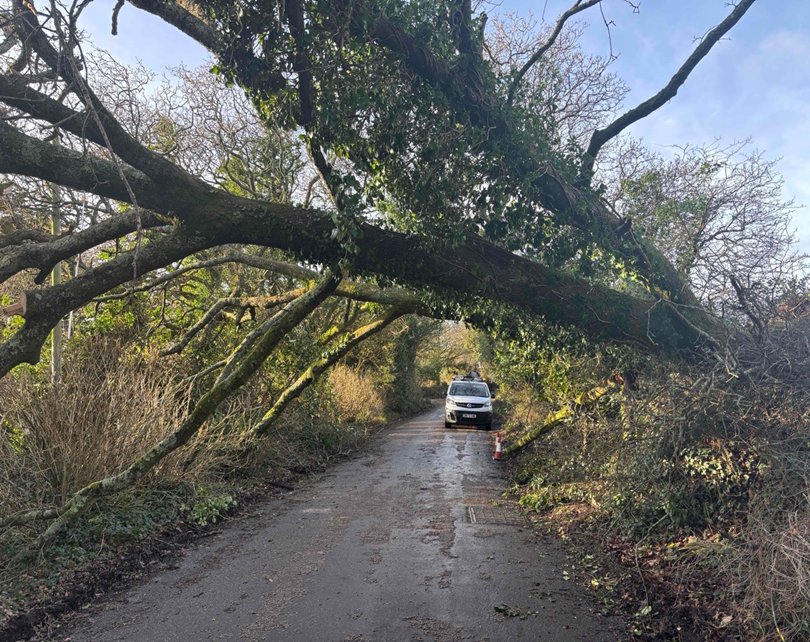
Storm Goretti has caused the worst impact to our network in Cornwall in recent memory and since it was safe to do so we've had teams of engineers working round the clock to repair the extensive damage.
The majority of people are now back up and running and we expect everyone to be back online by the end of this week bar just two or three repairs which we can't progress due to flooding or other matters beyond our control.
Weather conditions on the ground have slowed down the completion of critical overhead work such as replacing aerial cables as wind speeds and gusts are restricting the use of hoists, which can't be used in high winds for safety reasons.
We’re very sorry to those customers still affected but our engineers are working as quickly as possible to get to them. Unfortunately, the reality is that this type of repair work – closing roads, replacing poles and overhead cables – is complex and time consuming.
Here’s a snapshot of how the storm affected our network
1) Preparations
Knowing the storm was on its way, we moved specialist repair equipment closer to the areas expected to be worst hit and had teams of engineers on standby for rapid deployment. Our customer service teams were also prepared to track and assess the damage, making sure we could prioritise repairs effectively.
2) Safety first
Keeping our people and the public safe is always our top priority, so we asked engineers to remain indoors during red weather warnings. In amber/yellow warning zones, we carried out rigorous risk assessments before any work began.
3) Impacts from power cuts
Much of our infrastructure relies on mains power, so inevitably some of our equipment was affected by power outages. Fortunately, our backup systems – including generators and batteries - keep many services running while power companies work on repairs. In areas without physical damage, broadband and phone services should automatically return as soon as power’s restored.
4) Managing unprecedented workloads
Even with well-established processes, an extreme event like this puts enormous pressure on our systems. In Cornwall we’ve brought in hundreds of additional engineers and specialists to support the repair work. Now that service is restored in the worst snow hit areas in Mid-Wales and other parts of the UK, teams from those areas are now being moved into Cornwall to provide even more additional support. We paused all non-critical work across Devon and Cornwall to make sure all resource is focused on the storm repairs.
To handle the surge in damage reports, we’ve brought in more people but wait times for reporting damage to our network are longer than usual, and we appreciate people’s patience.
5) Replacing damaged poles
Openreach has over four million poles across the UK, and they’re all designed to withstand tough conditions. But the sheer force of Storm Goretti, and so many falling trees, left nearly 200 poles badly damaged.
Replacing poles is one of the most complex jobs we do. It needs specialist equipment and engineers, specific safety measures, and often permissions for road closures with temporary traffic lights. In some areas, we’re replacing multiple poles making the whole process even more time-consuming.
Why do we use poles rather than burying every cable underground? It’s a lot to do with the economics, but also the disruption to communities that digging underground ducts entails. It’s not just hugely expensive to build networks underground, it also means far more road works and closures, bringing communities to a standstill.
We want to deliver a fast, reliable and – crucially - affordable service to millions of homes and businesses – and that’s what we’re doing. Our network has hundreds of competing service providers offering a big choice of products and services, and we’re constantly innovating to deliver the most resilient infrastructure possible in the most efficient way.
It’s also worth bearing in mind that underground networks aren’t immune from extreme weather events like flooding.
6) Rapid repairs
The moment red weather warnings were lifted, and it was safe, we got to work. Since then, we’ve not stopped.
Engineers are working around the clock, and we’ve moved teams from less-affected parts of the UK to help with repairs.
7) We won’t stop
We know how frustrating it is to lose your broadband and phone services, so we’re working as fast as we can. But the reality is that some repairs, like pole replacements, can be very complex and take more time.
We’re keeping our service provider customers updated regularly on our progress so they can share the latest information about repairs and disruptions with their customers.
A huge thank you
We want to give a massive thank you to all our people who are working tirelessly. They’re battling the elements, putting in extra hours, and travelling away from their families to support colleagues.
We also really appreciate the patience and support of communities still without connectivity. We’re doing everything we can to get you back online as quickly as possible.
















