

Openreach hits digital milestone with Deddington Exchange closure
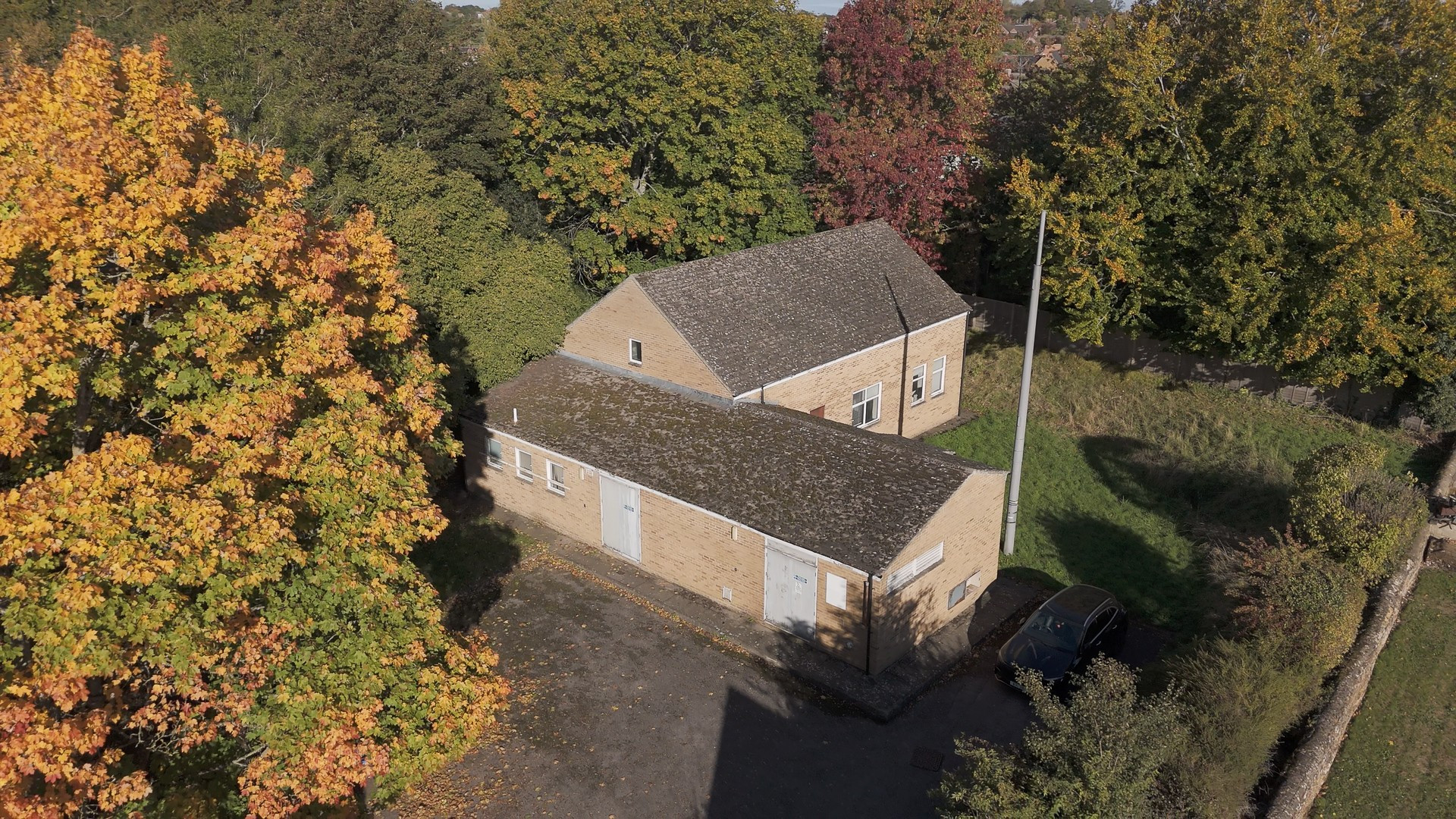
· Deddington first to shut its doors as part of plans to close 80% of UK exchanges
· First UK location to ‘close’ the traditional landline phone system (PSTN)
Openreach has exited the Deddington Exchange in Oxfordshire, making it the first of 4,600 exchanges across the UK to be fully de-commissioned as part of a nationwide shift from copper networks to digital full fibre infrastructure.
Deddington also becomes the first UK location to see the closure of BT’s copper based public switched telephone network (PSTN) – which uses copper wires to carry analogue voice signals, with end customers all upgraded to digital full fibre.
The rural exchange is the first of three pilot exchanges (the others being Ballyclare in Northern Ireland, and Kenton Rd in London) that are due to close by the end of November.[1]
The three exchanges are part of Openreach’s long-term plan to exit 4,600 exchanges. These are currently used to support traditional copper-based phone and broadband voice services and will no longer be required once customers have migrated to fibre. In addition to the three pilot exchanges, Openreach plans to exit a further 105 ‘priority exchanges’ by December 2030.
New digital networks use fibre cables and software-based switches. They need far less physical space than traditional copper-based analogue systems, which require large exchanges to house bulky switches and miles of copper wiring.
The move to digital will mean that Openreach needs just 1,000 ‘super digital exchanges’ – also called Openreach Handover Points (OHPs) - to serve the whole of the UK. On average each OHP replaces 4-5 traditional exchanges. Some OHPs may replace ten or more exchanges – especially in urban areas with high full fibre penetration.
In Deddington, around 1,800 copper lines providing connectivity to local homes and businesses, have now been upgraded to full fibre, with those new digital lines now served and managed by nearby Banbury Exchange – one of Openreach’s new ‘super digital exchanges.’
Closing an exchange and migrating affected customers is a highly complex process, which typically takes around 4-7 years – depending on the size and complexity of each exchange. Openreach announced plans to exit Deddington in 2020, allowing Communication Providers (CPs) to assess legacy equipment and to start notifying customers.
The physical migration of all customer services out of the Deddington exchange took around 26 months, starting with the halting of the sale of traditional copper-based Wholesale Line Rental (WLR)[2] products and services, in September 2023. Openreach worked closely with CPs to overcome the challenges of identifying lines serving Critical National Infrastructure (CNI) – helping to upgrade everything from traffic light control systems, payment terminals, lift emergency lines, as well as working to safely migrate vulnerable customers and ensuring telecare and telehealth devices work over new digital lines.
James Lilley, Openreach’s Managed Customer Migrations Director, said: “Closing thousands of ‘legacy’ exchanges is a major undertaking, with several million services needing to be migrated. Deddington has served as a proof of concept, demonstrating our ability to decommission legacy exchanges safely, securely, and collaboratively.
“Moving to this new digital world will ultimately benefit everybody. CPs will be able to serve their customers from fewer exchanges, helping to save costs through consolidation of equipment and reduced space and power requirements. And millions of end users will benefit from more reliable and faster fibre-based services – that will be scalable for decades without needing major upgrades.
“It’s not just about switching off old kit—it’s about building a future-proofed, simpler network for the UK.”
With the switching off of legacy services in Deddington now complete, Openreach will continue to work with CPs to remove physical equipment over the next few months to ultimately vacate the building. Teams will assess and re-purpose selected assets, either for use as critical spares across the network or for resale, contributing to sustainability and cost-efficiency.
-ENDS-
Notes to Editors
· The closure of the next 105 ‘priority exchanges’ plus the three pilot exchanges by 2030, will take place in four phases over the next five years, and closures will accelerate rapidly thereafter. Work has been announced to start on another 12 exchanges – due to start in April 2026, with a two-year window to move customers onto All IP.
· The rough dates are given so that communication providers still using the exchanges or have services running via them can get their plans in order. Exact dates and times will be shared with providers with 28 days’ notice given.
The next twelve exchanges are:
- Staines
- Thames Ditton
- Baynard
- Wraysbury
- Nazeing
- Langford
- Allestree Park
- Beacon
- Childwall
- Lundin Links
- Carrickfergus
- Glengormley
[1] If a CP fails to cease and/or migrate the services by the end of 30 November 2025, any live business assets which do not have an inflight order or have not been agreed as critical life impacting services, will be ceased by Openreach from the 1 December 2025. We are reviewing our position to cease consumer customers and will continue to work with all stakeholders to safely exit the Pilot exchanges.
[2] Wholesale Line Rental (WLR) services are legacy products that allow communications providers (CPs) to rent a telephone line from Openreach and offer their own branded voice services over the Public Switched Telephone Network (PSTN).
·
















