

Openreach announces price changes to encourage digital adoption of newer, more reliable and better value technology
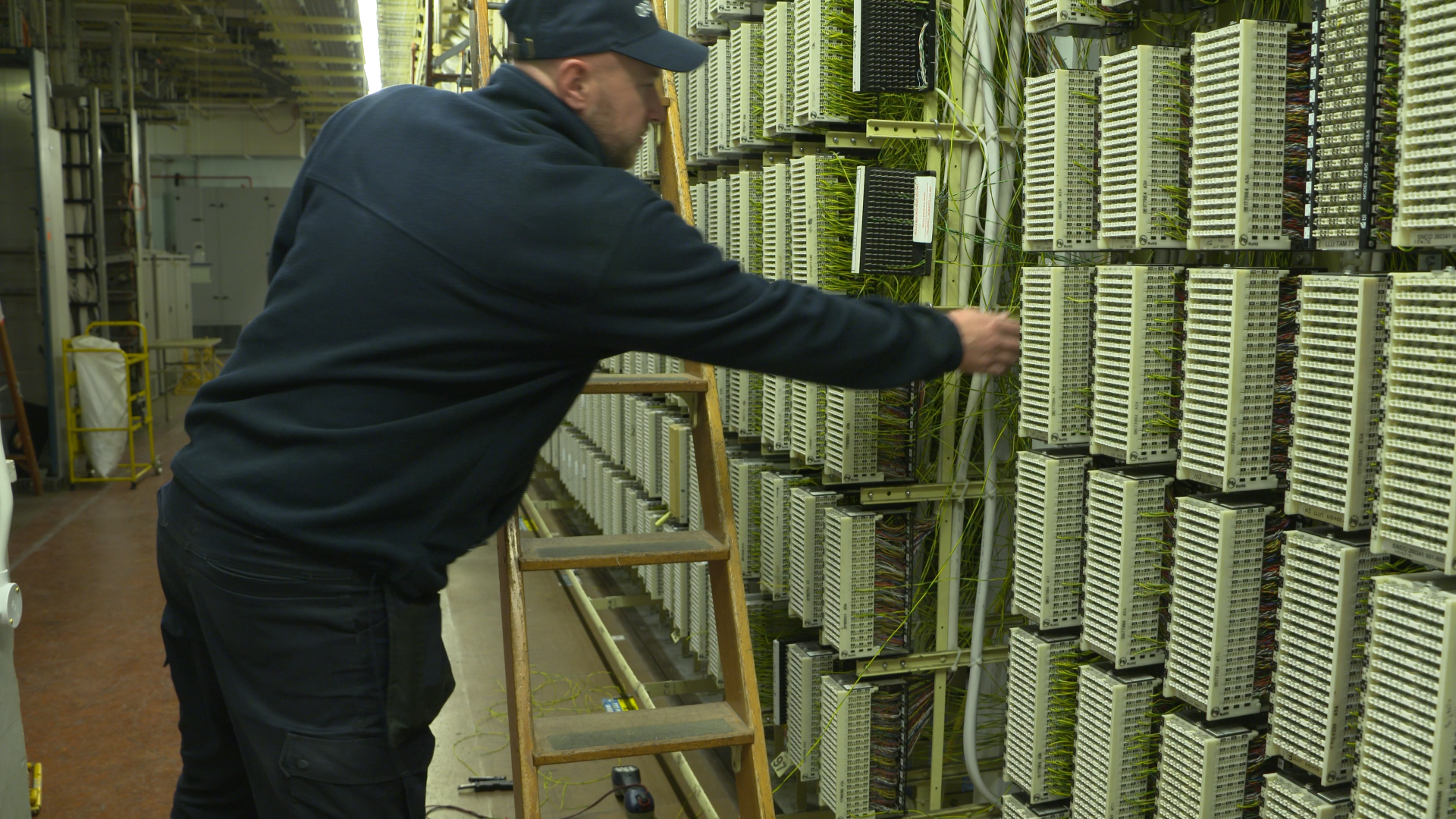
Openreach has announced price rises for its copper products and services which are designed to encourage communications providers to upgrade their customers to digital alternatives before legacy services are switched off in January 2027.
The business will introduce increases on four of its copper-based products – which will see prices double in the final three months before the Public Switched Telephone Network (PSTN) – the old system used for landline calls – is switched off.
Rental prices for Openreach’s Wholesale Line Rental (WLR) basic product and other WLR variants, will increase by 20 per cent from April 1st next year, followed by a 40 per cent rise, on the current price, in July, and rising by a further 40 per cent in October, double the current rental price.
At the same time – Openreach is adding to a number of existing migration incentives by launching a connection special offer – providing free or discounted connection for Communication Providers (CPs) who upgrade their customers to SOGEA[1] – an alternative service providing a digital line where full fibre is not yet available.
The connection offer complements existing incentives, including the Equinox pricing scheme, ‘try before you buy’ offer for new-to-network Full Fibre orders, as well as a recently launched special offer on existing Ethernet Access Direct (EAD) lines for speeds of 1Gbps or below.[2] Customers can move to alternative Openreach fibre products, including FTTP, with free connection and for less than the price of WLR even before the price rises come in to effect.[3]
In October, the business removed another major barrier to the UK’s transition away from the PSTN, with the launch of its telecare migration service – Prove Telecare, a special migration service that enables telecare users (often elderly or vulnerable people) to move to digital phone lines without losing access to their life-saving devices.2
The new measures are being brought in as digital migration rates need to accelerate to ensure no end customers are left on the PSTN by the end of January 2027. There are currently around three million lines that need to be upgraded to digital alternatives before the deadline – with a conversion rate needed of around 47k every week.
However, it is predicted that lines could still be left after the 2027 deadline, with some supporting vulnerable customers and Critical National Infrastructure (CNI).
To help upgrade remaining lines, Openreach plans to move these customers to an emergency voice-only service which is not reliant on the PSTN[4] - but which can emulate PSTN-like features to support legacy equipment. The ‘no frills’ service will offer a very limited and basic feature set, beginning on 1 February 2027 and continuing until all customers are moved, with the precise timing depending on the volume.
James Lilley, Openreach’s Managed Customer Migrations Director, said: “We need to accelerate the pace of migration to ensure no customer is left behind. These price adjustments are designed to drive action, while our special offers help make the transition smoother for everyone.”
“With the PSTN switch-off now just over a year away, we’re making these changes to send a clear signal – Communications Providers must act now to move customers – we are reaffirming the deadline for closure , and with the wide availability of full fibre and digital alternatives – providing greater reliability, speed, scalability, and a host of other benefits to both businesses and consumers - there’s no real reason not to.”
ENDS
Notes to editors
Price increases
· On 1 April 2026 the WLR basic rental price will rise from the current price of £10.65 by 20%. The rental price will also rise for other WLR variants
· On 1 July 2026 the WLR basic rental price will rise by 40% of the current price. The rental price will also rise for other WLR variants
· On 1 October 2026 the WLR basic rental price will rise by a further 40% of the current price. This will be to double the current rental price. The rental price will also rise for other WLR variants.
Connection offer
· This offer will be for:
o WLR solus (a standalone voice-only service, typically used for traditional landline calls, Alarm systems or emergency lines and low-usage or legacy voice-only customers)
o WLR+SMPF (Provides ADSL broadband over a WLR line. It allows two different providers to share the same copper line: One for voice, via WLR, and one for broadband, via SMPF.
o WLR+FTTC lines (WLR providing voice service over a copper line and broadband over Fibre to the Cabinet) using a migration journey to SOGEA.
o The connection fee will be reduced to zero for non-appointed journeys and discounted for a SOGEA managed install.
Emergency voice-only service
· This product will only be available as a migration, as it has only been developed by Openreach to enable the PSTN to be switched off on time.
· The product will be feature-light. Pricing will be confirmed at a later date.
[1] SOGEA or Single Order Generic Ethernet Access, works over Openreach’s existing Fibre-to-the-Cabinet network - but removes the need for a traditional phone line (PSTN). Voice calls over the internet instead of copper lines (VoIP). SOGEA is available to 98.5% of UK premises
[2] Prove Telecare, is a special migration service for telecare in which an Openreach engineer migrates both the phone line and the telecare device to the new digital service, and then confirms with the telecare provider that the telecare device is still working.
[3] For example, CPs could save around £21 annually by moving a customer from a WLR 80Mbps + FTTC product to an 80Mpbs SOGEA equivalent.
[4] The service will work over Openreach’s SOTAP Analogue (Single Order Transitional Access Product for Analogue) product, which is an exchange-based IP-voice service that replicates how the old service worked, but over a more modern network (i.e. it does not require broadband, new kit, an engineer visit or battery back-up to function).
















