

Innovation Unleashed: How Fibre Finds a Way
By Andy Whale - Chief Engineer at Openreach

During September, Openreach hits a major landmark: 20 million homes and businesses - around 70% of the UK - will be within reach of our most reliable broadband technology: full fibre.
But this isn’t just a milestone. It’s an engineering marvel.
Behind every metre of fibre laid is a story of innovation - of engineers rethinking the rules, of technology doing some heavy lifting, and of a network that’s not just growing, but evolving.
When the ground gets tough, we take to the skies
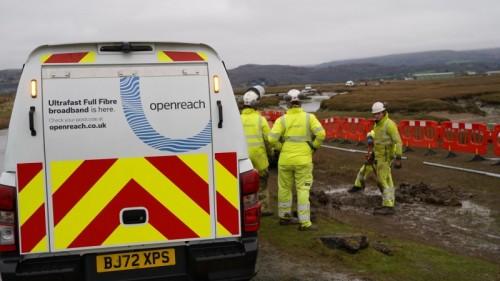
Rolling out fibre across the UK’s varied terrain – including remote and protected landscapes - can sometimes hit obstacles. So when the ground prevents progress, we go airborne.
Our DroneOps team - now 14 trained pilots strong - has now flown nearly 1,200 missions, helping Openreach with more than 400,000km of fibre, connecting more than 100,000 homes and businesses.
From soaring over steep gorges to gliding across wooded valleys, drones have helped us reach places traditional builds couldn’t. We’ve even deployed underwater drones to inspect and repair cables beneath Britain’s lakes and rivers.
And it’s not just about reach - it’s about speed. These missions have saved over 600 days of ‘dwell time’, avoided more than 100 requests for temporary traffic lights, and helped us skip 50-60km of disruptive duct digging. Which is good for customers and good for the environment.
Adapt to amplify
Innovation isn’t always about inventing something new. Sometimes, it’s about seeing the familiar in a new light.
Take our Subtended Headends (SHEs). By adapting our existing green roadside cabinets to carry new tech, we’ve extended the reach of our fibre signal up to threefold, without the need to build new spine cables from exchange to property.
We’ve now installed 1,200 fibre-boosting nodes like this, saving £120 million and 8,500km of fibre that we didn’t need to lay.
Or consider ‘overblow’ technology - where new fibres are propelled on a cushion of air through existing ducts. It’s not only faster, but it uses fewer materials, it’s less invasive for nature, and it dramatically reduces the need for roadworks which disrupt communities.
Turning VR into reality
In cities, the challenge isn’t distance, it’s density. Apartment blocks and flats traditionally require multiple site visits, manual measurements, and lots of paperwork.
Enter Holoplan.
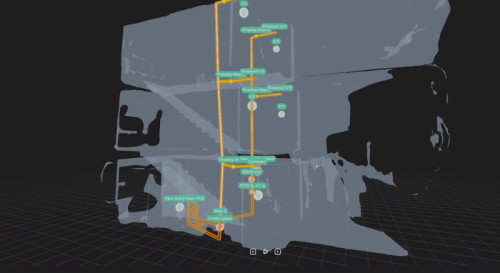
Developed with our partners Digitalnauts, this LiDAR-powered tech turns a smartphone into a 3D scanner. Engineers can now create accurate VR models of buildings in seconds - mapping cable routes, equipment, and layouts in real time.
And the result?
Twice as many buildings surveyed per day, and costs slashed by up to 65%.
Keep pushing with purpose
As we push to 20 million premises and beyond, the next wave will be even tougher, more rural, more remote, and harder to connect. But we’re ready.
Because innovation at Openreach isn’t just about gadgets and gizmos. It’s about solving real problems, for real people. It’s about making sure no community is left behind in the UK’s digital future and doing this respectfully, sensitively and in harmony with nature.
From drones in the sky to fibre in the ground, from VR scans to air-propelled cables, this is what innovation looks like when it’s done with purpose.
And we’re just getting started.
















